New Jersey Car Accident Laws: What Drivers Need to Know
Updated On: August 10, 2026
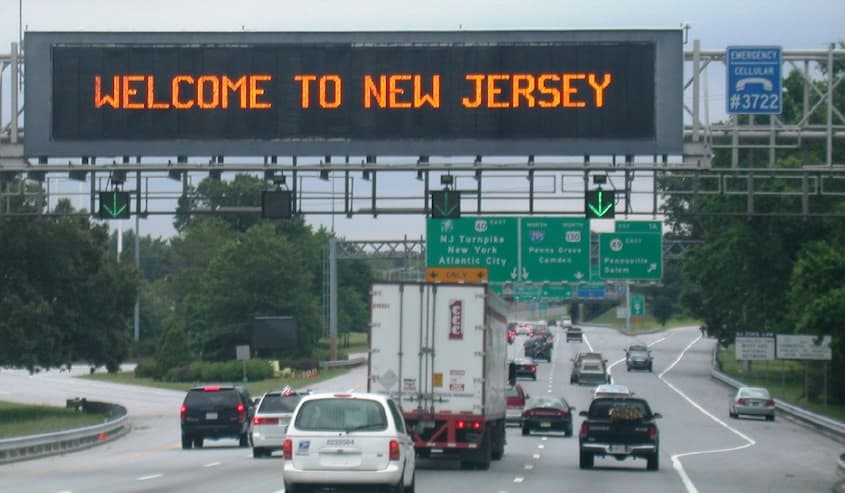
Understanding New Jersey car accident laws.
Quick Reference Summary
| Insurance System | No-fault (choice) |
|---|---|
| Comparative Fault Standard | Modified comparative fault — 50% bar |
| Personal Injury Statute of Limitations | 2 years from date of accident |
| Property Damage Statute of Limitations | 6 years |
| Wrongful Death Statute of Limitations | 2 years from date of death |
| Government Entity Notice Deadline | Notice of claim within 90 days |
| Minimum Bodily Injury Coverage | $35,000 per person / $70,000 per accident* |
| Minimum Property Damage Coverage | $25,000 per accident* |
| PIP Required | Yes — $15,000 minimum per person |
| Punitive Damages Cap | Yes — 5x compensatory or $350,000, whichever is greater |
*New Jersey raised its minimum liability coverage in two phases under Senate Bill 482. Property damage increased from $5,000 to $25,000 on January 1, 2023. Bodily injury increased to $35,000 per person and $70,000 per accident on January 1, 2026. These increases apply only to Standard Policies. The Basic Policy is not subject to the updated minimums.
Insurance System & Requirements
New Jersey is a choice no-fault state. All drivers must carry Personal Injury Protection (PIP), which covers their own medical expenses and lost wages after a crash regardless of fault. At the same time, drivers choose one of two tort options at the time of purchasing insurance, which determines their right to sue for pain and suffering. That choice is covered in the next section.
Minimum required coverages
New Jersey's minimum liability coverage increased in two phases under Senate Bill 482. For Standard Policies, the current minimums effective January 1, 2026, are:
- Bodily Injury Liability: $35,000 per person / $70,000 per accident
- Property Damage Liability: $25,000 per accident
- Personal Injury Protection (PIP): $15,000 per person per accident
The Basic Policy, which offers minimal coverage at lower cost, is not subject to the SB 482 increases. Basic Policy minimums remain lower and provide significantly less protection. Drivers on a Basic Policy should understand they may be personally liable for damages that exceed those minimums in a serious crash.
UM/UIM coverage
New Jersey requires uninsured motorist (UM) coverage equal to the driver's liability limits on Standard Policies. Underinsured motorist (UIM) coverage is available as an option and is strongly recommended given the risk of encountering drivers still carrying the lower pre-2026 minimums during the transition period.
Optional coverages
Collision, comprehensive, MedPay, and gap insurance are available but not required by state law. Lenders typically require collision and comprehensive for financed or leased vehicles.
Rideshare coverage requirements
For Uber, Lyft, and similar platform drivers, New Jersey law establishes coverage by driver status:
- App on, no ride accepted: $50,000 per person / $100,000 per accident for bodily injury; $25,000 for property damage
- Ride accepted or passenger onboard: $1,500,000 in combined liability coverage
Penalties for non-compliance
A first offense for driving uninsured in New Jersey carries a fine up to $1,000, mandatory community service, and a one-year license suspension. Subsequent offenses carry fines up to $5,000, up to 14 days in jail, and a two-year suspension. Reinstatement requires proof of insurance and payment of restoration fees.
Fault & Negligence Laws
Modified comparative fault
New Jersey follows a modified comparative fault rule under N.J.S.A. 2A:15-5.1. A plaintiff found 50 percent or less at fault can recover damages, with the amount reduced proportionally to their share. A plaintiff found more than 50 percent at fault recovers nothing. This is a 50 percent bar rather than the 51 percent bar used in Florida, meaning a plaintiff found exactly 50 percent at fault can still recover half their damages.
For example, if a court finds you 30 percent at fault and awards $100,000 in damages, you recover $70,000. If you are found 51 percent at fault, you recover nothing.
Distracted driving and fault
New Jersey's hands-free law under N.J.S.A. 39:4-97.3 prohibits using a handheld device while driving. Violations carry fines up to $800 for repeat offenses and points on the license. In a civil claim, a violation of this statute can support a negligence per se argument, meaning the violation itself establishes the breach of duty without requiring separate proof of unreasonable conduct. This matters practically: a driver who was on their phone when a crash occurred has already established their own fault through the statutory violation.
Multi-vehicle collisions
When more than two parties share responsibility, fault is allocated proportionally among all involved. Each defendant is generally liable only for their own share of non-economic damages. Joint and several liability for economic damages may apply in certain circumstances.
Passenger rights
Passengers are generally not considered at fault and can pursue claims against any at-fault driver involved. In wrongful death cases, surviving family members can pursue a wrongful death claim without their recovery being reduced by the deceased passenger's fault. For a broader explanation of how comparative fault systems compare across states, see our article on comparative and contributory negligence.
New Jersey's Verbal Threshold
New Jersey's most distinctive legal feature for crash victims is the verbal threshold, also called the limitation on lawsuit option. Unlike most states where the right to sue for pain and suffering is uniform, New Jersey drivers choose their own threshold option at the time of purchasing car insurance policies. That choice, often made without fully understanding its consequences, determines whether an injured driver can sue for non-economic damages after a crash.
The two tort options
Under the Automobile Insurance Cost Reduction Act (AICRA), every New Jersey driver who carries PIP coverage must elect one of two tort options:
- Limitation on lawsuit (verbal threshold): Restricts the right to sue for pain and suffering unless the injury meets specific qualifying criteria. Most drivers choose this option because it carries lower premiums
- No limitation on lawsuit (no threshold): Preserves the full right to sue for pain and suffering regardless of injury severity. This option costs more but removes the threshold barrier entirely
What qualifies under the verbal threshold
Drivers who selected the verbal threshold can only sue for non-economic damages if their injury falls into one of the following categories under N.J.S.A. 39:6A-8:
- Death
- Dismemberment
- Significant disfigurement or significant scarring
- Displaced fracture
- Loss of a fetus
- Permanent injury within a reasonable degree of medical probability, other than scarring or disfigurement
The permanent injury category is the most frequently litigated. It requires objective medical evidence, not solely the claimant's account of their symptoms. Soft-tissue injuries, sprains, and strains that fully resolve generally do not qualify. Injuries that produce permanent structural damage with documented functional limitation have the strongest basis for meeting the threshold.
Why this matters in practice
Most New Jersey drivers select the verbal threshold without fully understanding the restriction it imposes. The cost savings on premiums are real, but so is the consequence: a driver who selected the verbal threshold and suffers a painful but non-permanent injury after a crash may find that PIP covers their medical bills while they have no path to additional compensation for what the injury cost them in daily life.
The verbal threshold also interacts with the modified comparative fault rule. A verbal threshold claimant who meets the serious injury requirement still cannot recover if their own fault exceeds 50 percent, meaning the two barriers operate independently rather than one substituting for the other.
Claims involving government entities
Injury claims against public entities under the New Jersey Tort Claims Act carry their own non-economic damages threshold under N.J.S.A. 59:9-2(d), which requires a "permanent loss of a bodily function that is substantial and medically determinable." This threshold applies regardless of which tort option the claimant elected, and it is stricter than the verbal threshold standard because of the protections afforded by sovereign immunity.
Statute of Limitations
The statute of limitations sets the deadline for filing a lawsuit after a car accident. Missing the applicable deadline almost always bars the claim permanently.
Standard filing deadlines in New Jersey
- Personal injury: 2 years from the date of the accident
- Property damage: 6 years from the date of the accident
- Wrongful death: 2 years from the date of the victim's death
New Jersey's six-year property damage SOL is notably longer than most states, giving vehicle owners meaningful time to pursue repair and replacement claims. The two-year personal injury and wrongful death windows are consistent with most other states and have not been changed by recent legislation.
Claims against government entities
Claims against New Jersey state agencies, counties, municipalities, and public entities require a formal notice of claim filed within 90 days of the accident under the New Jersey Tort Claims Act. Missing this deadline bars the claim regardless of its merits. After the notice is filed, the government has 90 days to respond before a lawsuit can be initiated.
One important recent development: the United States Supreme Court ruled in Galette v. New Jersey Transit Corp. (March 4, 2026) that NJ Transit is not an arm of the state and cannot claim sovereign immunity. This means injury victims can sue NJ Transit in other states' courts. The practical implication for claimants is that NJ Transit injuries may now proceed under different procedural rules depending on where the lawsuit is filed, which affects which notice requirements and SOL periods apply.
Tolling and exceptions
- Minors: The SOL is tolled until the injured person turns 18. A minor generally has until their 20th birthday to file a personal injury claim. This tolling does not apply to the 90-day government tort claim notice requirement
- Incapacity: The clock may be tolled if the injured person was legally incapacitated at the time of the accident
- Defendant absence from state: If the at-fault driver leaves New Jersey after the crash, the absence period may not count toward the limitations period
MVA Procedures & Police Involvement
When you are required to report an accident
New Jersey law requires drivers to report a crash when it resulted in injury or death to any person, or when it caused property damage exceeding $500. Contact law enforcement immediately for any accident involving injury or death. For property damage only, call local police or the New Jersey State Police if the crash occurs on a state highway.
If law enforcement does not respond to the scene and the accident meets the reporting threshold, each driver must file a crash report with the New Jersey Motor Vehicle Commission within 10 days.
How to file your crash report
When self-filing is required, drivers submit a Motor Vehicle Accident Report to the NJ MVC:
- Online: Through the NJ MVC's online portal
- By mail: Mail the completed form to the NJ MVC's Driver History Unit in Trenton
- In person: At any NJ MVC agency location
How to access your accident report
Police-filed accident reports are available through the New Jersey State Police for crashes they investigated, and through the local police department for municipally investigated crashes. Requests can be made online, by mail, or in person. A fee applies. Verify current fees and processing times online before submitting a request.
Accident reports are primary reference documents for insurers and attorneys. If yours contains errors, see our article on what to do if your car accident police report is inaccurate for the steps involved.
Compensation: Types & Limits
New Jersey does not cap compensatory damages in personal injury cases, meaning injured parties can pursue the full value of their documented losses. Recovery depends on the nature of the injuries, the tort option elected, and whether the serious injury threshold is met, where applicable.
Economic damages
Economic damages are uncapped and include:
- Medical expenses, past and future
- Lost income and reduced earning capacity
- Property damage and vehicle repair or replacement
- Out-of-pocket expenses related to the crash and recovery
- Future care costs where injuries require ongoing treatment
Non-economic damages
Non-economic damages, including pain and suffering, emotional distress, and loss of enjoyment of life, are available without a statutory cap but are subject to the verbal threshold for drivers who elected the limitation-on-lawsuit option. Drivers who elected no limitation can pursue non-economic damages for any injury severity.
A spouse or domestic partner of a seriously injured person may bring a separate loss of consortium claim for the loss of companionship and support. Loss of consortium claims follow the same threshold rules as the underlying injury claim.
Wrongful death damages
When a crash results in death, surviving family members or the estate may pursue a wrongful death claim under N.J.S.A. 2A:31-1. Recoverable damages include the financial support the deceased would have provided, funeral and medical expenses, and the loss of companionship, guidance, and nurture where surviving dependents are involved.
Punitive damages
Punitive damages are available in cases involving actual malice or wanton and willful disregard for others. New Jersey caps punitive damages at five times the compensatory damages awarded or $350,000, whichever is greater under N.J.S.A. 2A:58C-5. This cap is higher in its multiplier than Florida's three-times cap but lower than California's uncapped framework.
Claims against government entities
New Jersey's Tort Claims Act permits suits against public entities but imposes a separate threshold for non-economic damages under N.J.S.A. 59:9-2(d): a plaintiff must demonstrate a permanent loss of a bodily function that is substantial and medically determinable. This threshold is stricter than the verbal threshold and applies regardless of the tort option the driver elected. The Galette decision has not changed this threshold for claims filed in New Jersey courts, though its effect on claims filed in other jurisdictions is still developing.
Medical Payments & Health Coverage
New Jersey's mandatory PIP system ensures that medical expenses are covered promptly after a crash without waiting for fault to be determined. The structure differs meaningfully from pure no-fault states because the tort option the driver elected shapes what additional recovery is available beyond PIP.
Personal Injury Protection (PIP)
PIP is mandatory in New Jersey and pays first, regardless of fault. Standard minimum PIP coverage is $15,000 per person per accident, with optional increases available up to $250,000 for catastrophic injuries, including spinal cord damage, brain injuries, and severe disfigurement. PIP covers:
- Medical and hospital expenses
- Lost wages up to 70 percent of weekly earnings, subject to policy limits
- Essential services such as household assistance during recovery
- Funeral expenses in fatal crashes
PIP applies to the named insured, resident relatives, and passengers in the covered vehicle. PIP also covers injuries sustained as a pedestrian or bicyclist struck by a vehicle.
Health insurance
Once PIP benefits are exhausted, health insurance covers ongoing medical treatment. Most health insurers will cover accident-related care, but may assert a subrogation lien on any settlement. Self-funded employer health plans governed by ERISA can assert subrogation rights that New Jersey's state rules cannot limit. Understanding your plan's subrogation terms before settling is important.
MedPay
Medical Payments coverage is available as an optional supplement to PIP and covers certain costs that fall outside PIP's scope. It is particularly useful for covering the gap between PIP's percentage-based payments and actual medical costs.
UM/UIM coverage
Standard Policy drivers are required to carry uninsured motorist coverage equal to their liability limits. Underinsured motorist coverage provides an additional layer when the at-fault driver's limits are insufficient. Given that many New Jersey drivers may still carry the pre-2026 lower minimums during the policy transition period, UIM coverage is particularly valuable right now for bridging the gap between what an at-fault driver carries and what a serious crash costs. Our article on what to do if you're in an accident with an uninsured driver covers how these claims work in practice.
Unique Local Considerations
High-volume corridors and commercial traffic
The New Jersey Turnpike and Garden State Parkway carry among the highest traffic volumes of any roads in the country. The Turnpike's overlap with I-95 through northeastern New Jersey makes it one of the most commercially trafficked corridors on the East Coast, with a high concentration of tractor-trailers, delivery vehicles, and interstate freight. Multi-vehicle crashes on these corridors frequently involve commercial carriers and multi-party liability questions.
Distracted driving enforcement
New Jersey has invested significantly in distracted driving enforcement, including documented use of plainclothes officers in elevated or concealed positions to observe handheld device use from close range. Beyond the fines and license points, distracted driving violations create direct civil liability exposure: a driver cited for a hands-free law violation at the time of a crash faces a negligence per se argument in any resulting civil claim, meaning the violation itself establishes fault without requiring the injured party to separately prove unreasonable conduct.
Winter road conditions
New Jersey's mid-Atlantic location produces significant ice, snow, and black ice exposure across northern and central counties, particularly on elevated highway sections and bridge decks. The I-95 corridor and the northern portions of the Turnpike are among the more hazardous winter driving environments in the Northeast. Fault determinations in weather-related crashes follow New Jersey's modified comparative fault framework, with courts examining whether drivers adjusted speed and following distance appropriately for the conditions encountered.
Local Resources & Contacts
New Jersey Motor Vehicle Commission (NJ MVC)
Handles driver licensing, vehicle registration, accident report filings, and license reinstatement after insurance-related suspensions.
- Website: nj.gov/mvc
- Phone: (609) 292-6500
New Jersey State Police (NJSP)
Responds to accidents on state highways and provides crash report access for NJSP-investigated crashes.
- Website: njsp.org
- Phone: (609) 882-2000; for emergencies dial 911
- Accident report requests
New Jersey Department of Banking and Insurance (NJDOBI)
Regulates auto insurance in New Jersey, handles consumer complaints about coverage disputes and insurer conduct, and provides information on policy requirements, including the 2026 coverage changes.
- Website: nj.gov/dobi
- Consumer hotline: (800) 446-7467
New Jersey Department of Transportation (NJDOT)
For road condition reports, highway safety information, and incident reporting on state roads.
- Website: nj.gov/transportation
- Road conditions: 511nj.org
For accident laws in other states, visit our state-specific legal information page.
Tell us about your accident & get a free consultation now

Advertising is paid for by participating attorneys in a joint advertising program, licensed to practice law in their respective states. A complete list of joint advertising attorneys can be found here. You can request an attorney by name. We are not a law firm or an attorney referral service. This advertisement is not legal advice and is not a guarantee or prediction of the outcome of your legal matter. Every case is different. The outcome depends on the laws, facts, and circumstances unique to each case. Hiring an attorney is an important decision that should not be based solely on advertising. Request free information about your attorney's background and experience. This advertising does not imply a higher quality of legal services than that provided by other attorneys. This advertising does not imply that the attorneys are certified specialists or experts in any area of law. No legal services will be provided unless a signed agreement between the client and the attorney exists. We use cookies to personalize content and to analyze our traffic. We also share information about your use of our site with our analytics partners, who may combine it with other information you've provided or collected from your use of their services. You consent to our cookies if you continue to use our website.