What to Do After an Accident: A Comprehensive Driver's Guide
Updated On: November 15, 2026
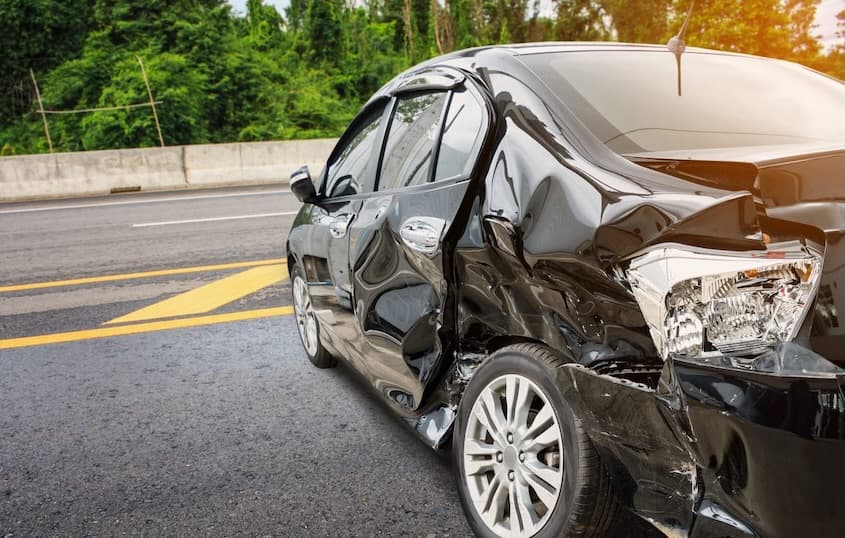
Car accidents are traumatic and you could find yourself unsure what to do next. Our guide can help.
This article is for informational purposes only and does not constitute medical or legal advice. Consult a qualified healthcare provider about your health and a licensed attorney about your legal options.
After a motor vehicle accident, the steps you take in the first hours and days affect your safety, your health, and any insurance or legal claim that follows. This guide covers what to do immediately after a car accident, what not to do after a car accident, and how fault and state law shape the aftermath of a car accident.
1. Ensure Safety First
Your first priority is the safety of everyone at the accident scene. Turn on your hazard lights and check yourself and your passengers for injuries. The Federal Highway Administration advises against moving an injured person unless they are in danger, such as near a vehicle that smells of gasoline or in the path of traffic. Leave their care to first responders.
If no one is hurt and your car can be driven, your state may require you to move it out of traffic. A Federal Highway Administration review found that about half of the states had "move it" or "steer it, clear it" laws requiring drivers in minor, no-injury crashes to move their vehicles out of the travel lanes.
2. Call Law Enforcement
Call 911 right away if anyone is hurt. Even after a less serious crash, a police report gives you an official record of what happened. The Insurance Information Institute notes that this record can help if the other driver later sues or the damage turns out worse than it first looked.
If officers come to the scene, note their names and badge numbers and ask where to get a copy of the report. If police can't come, you can file a report yourself at the nearest police department or on its website. When you speak with officers, describe what happened factually and avoid guessing about speed, distance, or fault.
Some states also require a separate report to the state motor vehicle agency. In California, for example, drivers must file an SR-1 accident report with the DMV within 10 days if the crash caused an injury, a death, or more than $1,000 in property damage, even if police already took a report.
3. Gather Evidence at the Scene
Once everyone is safe, document as much as you can. Photos and notes taken at the scene of the accident can help you disprove inaccurate accounts later.
- Photographs: Vehicle damage on every car involved, license plates, skid marks, traffic signals, road conditions, and any visible injuries
- Witnesses: Names and contact details for anyone who saw the crash, plus brief witness statements if they're willing to give them
- Exchange information: Each driver's name, phone number, and driver's license number, along with their insurance information (the company name and policy number) and the make, model, and plate number of each vehicle
- Time and conditions: Where and when the crash happened and what the weather was like
Keep conversations with the other driver to the facts. The Insurance Information Institute advises against discussing who was at fault or how much insurance you carry.
4. Seek Medical Attention Immediately
Get a medical evaluation after a crash, even if you feel fine, because some injuries take time to show symptoms. Soft tissue injuries such as whiplash, which strains the muscles and ligaments of the neck, can take 12 hours to a few days for all symptoms to appear.
A prompt visit also creates medical records that connect your injuries to the crash. A long gap between the crash and your first visit can make that connection harder to show.
Good to know: In Florida, you generally must receive initial care within 14 days of a crash to use your personal injury protection (PIP) benefits, under Florida Statutes § 627.736.
5. File an Insurance Claim Promptly
Notify your insurance company as soon as possible, even if the other driver caused the crash. The Insurance Information Institute notes that the longer you wait, the harder it is to remember the details. Give the insurer the facts, your photos, and the report number, and avoid describing your injuries as minor before a doctor has examined you.
Who pays first
This depends on your state, according to the Insurance Institute for Highway Safety:
- No-fault states: Your own PIP coverage pays your injury-related medical expenses, regardless of who caused the crash
- Other states: The at-fault driver's liability coverage pays for injuries they cause to others, and medical payments coverage (MedPay), if you carry it, covers your own and your passengers' injuries
If the other driver caused the crash
You can usually choose where to file:
- Their insurer: A claim with the at-fault driver's insurer doesn't involve your deductible
- Your own collision coverage: You pay your deductible, and your insurer can try to recover it from the at-fault driver through a process called subrogation. In Washington, for example, insurers must include your deductible in their subrogation demand, though you recover only a percentage if you're found partly at fault
- Uninsured motorist coverage: If the at-fault driver has no insurance, which applied to 15.4% of U.S. drivers in 2023, uninsured/underinsured motorist (UM/UIM) coverage on your own policy may pay your medical bills and other losses
If you caused the crash
Your liability coverage pays the other driver's damages up to your policy limits, and you can be held personally responsible for anything above them. Check your insurance policy for its notice and cooperation requirements, and send your insurer any demand letter or lawsuit right away.
For a step-by-step look at the claims process, see how to file a car insurance claim.
6. Consider Legal Counsel
An attorney may be helpful if you were seriously injured, fault is disputed, or an insurer's offer doesn't cover your losses. A car accident lawyer can explain your options, communicate with insurers on your behalf, and file a lawsuit if one is needed. Read more about why you may want a lawyer after a car accident.
Every state sets a statute of limitations, the deadline for filing a lawsuit after a crash. Most states allow 2 or 3 years for personal injury claims, but some deadlines are shorter or longer, and claims for damage to your car can have a different deadline. Louisiana, for example, extended its deadline from 1 year to 2 years for crashes on or after July 1, 2024. Claims against a government agency can require notice much sooner. In California, an injury claim against a public entity must be filed within 6 months. You can look up your state's filing deadlines on its state page.
What Not to Do After a Car Accident
These are some of the most common mistakes after a crash, and the ones most likely to affect your safety or your claim. For more on the insurance side, see insurance mistakes to avoid after a car accident.
Leaving the scene
In California, for example, drivers involved in a crash must stop, and leaving the scene of an accident can lead to criminal charges. It can be charged as a felony under Vehicle Code § 20001 when someone is injured, and as a misdemeanor under § 20002 when only property is damaged.
Admitting fault or apologizing
Fault is a legal conclusion that depends on the evidence and your state's negligence rules, and the other driver may share responsibility even if you made a mistake. A statement like "I'm sorry" or "it was my fault" at the scene can be used to assign you more responsibility than the evidence supports. Answer questions from police and insurers truthfully, and describe what happened rather than who was to blame.
Making side deals with the other driver
Agreeing to handle the crash privately, such as accepting cash at the scene or promising not to file a claim, leaves you with little to fall back on if repairs cost more than expected or an injury appears later.
Giving a recorded statement to the other driver's insurer
Insurance adjusters from the other driver's insurer may call soon after the crash and ask to record your account. You can ask to wait until you've spoken with your own insurer or an attorney before agreeing to a recorded statement, since what you say on the record can be used when that insurer decides fault and the value of your claim. Learn more about responding to claim adjusters.
Posting about the crash on social media
Public posts and photos can be seen by insurers handling your claim, and a photo from a gym or a trip can be used to argue that your injuries are less serious than you've said. Consider keeping your accounts private and not discussing the crash online until your claim is resolved.
Repairing your car before documenting the damage
Once a car is repaired, the evidence of how it was hit is gone. Photograph the damage and let your insurer inspect or appraise the car before repairs begin, and keep copies of every estimate and invoice.
Stopping medical treatment early
Missing follow-up appointments or ending medical treatment before your doctor advises can make it harder to show how serious your injuries were. Keep a record of every visit, prescription, and receipt.
Accepting the first settlement offer
An early offer may come before the full extent of your injuries is known. If you accept a settlement and sign a release, you give up your right to sue over that claim in exchange for the payment. Read what the release covers before you sign, and consider having an attorney review the offer.
How State Laws Affect Your Claim
Your state's fault rule decides whether you can recover anything if you share the blame for an auto accident. Most states follow some form of comparative negligence (also called comparative fault), which reduces your compensation by your share of fault. A few follow contributory negligence, which can bar a car accident claim entirely.
| Rule | How it works | Example states |
|---|---|---|
| Pure comparative negligence | Compensation is reduced by your share of fault, even if you were mostly at fault | California, New York |
| Modified comparative negligence (51% bar) | Compensation is reduced by your share of fault; no recovery if you are 51% or more at fault | Texas, Louisiana |
| Modified comparative negligence (50% bar) | Compensation is reduced by your share of fault; no recovery if you are 50% or more at fault | Georgia |
| Contributory negligence | Any share of fault, even 1%, can bar recovery | Alabama, Maryland, North Carolina, Virginia, and Washington, DC (which has exceptions for pedestrians and cyclists) |
As a hypothetical example, if your damages total $100,000 and you're found 20% at fault, you could recover $80,000 in a comparative negligence state. In a contributory negligence state, that same 20% could leave you with nothing.
Louisiana moved from pure comparative negligence to a 51% bar for crashes on or after January 1, 2026. Your state page explains the rule that applies where you crashed.
Emotional Recovery After a Car Crash
Stress, fear, and trouble sleeping are common after a crash, and for some car accident victims, these reactions last. Post-traumatic stress disorder (PTSD) can include flashbacks, nightmares, being easily startled, and avoiding driving or riding in a car, according to the National Institute of Mental Health. If symptoms last more than a month and interfere with work or relationships, NIMH recommends working with a mental health professional.
For more on coping in the weeks after a crash, see recovering emotionally after a car accident. When you feel ready to get back behind the wheel, defensive driving techniques can help you feel more in control on the road.
Vehicle Repairs & Rental Cars
Your car insurance company may recommend a repair shop, but the choice is typically yours, as Washington's insurance commissioner explains. In Texas and Louisiana, state law gives you the right to choose. Tell your adjuster which shop you choose before work begins.
If your car is declared a total loss, the settlement is based on its actual cash value. For a rental, check whether your policy includes rental coverage and what its limits are. If the other driver caused the crash, their insurer may offer rental coverage while your car is repaired.
What to Do Next
After a crash, focus first on safety and medical care, then document the scene, report the crash, and notify your insurer. Keep records of everything, and learn your state's filing deadline so you can protect your legal rights.
If you were hurt in a car accident, the independent attorneys we connect you with can review your situation in a free consultation.
FAQs
What should I do after a minor car accident?
Move to a safe spot if you can, exchange information with the other driver, and photograph both cars and the scene. Report the crash to police if your state requires it, and to your insurer. Minor impacts can still cause hidden damage or delayed injuries, so get medical care if symptoms appear.
Should you ever skip calling the police after an accident?
Generally, no. Call 911 if anyone is hurt, and if police don't come to a minor crash, you can file a report yourself at a police station or online. Some states also require a separate DMV report, such as California's SR-1 for crashes involving an injury or more than $1,000 in property damage.
What should I do after a car accident that's not my fault?
Follow the same steps at the scene, then notify your own insurer. You can usually file with the other driver's insurer or under your own collision coverage, as explained in step 5.
What should I do after a car accident that was my fault?
Check for injuries, call for help, exchange information, and report the crash to police and your insurer. Your liability coverage pays the other driver's damages up to your limits, so send your insurer any demand letter or lawsuit you receive.
What if I can't afford a lawyer?
Many personal injury attorneys work on a contingency fee basis, taking a percentage of any settlement or award. Fee terms and case costs vary, so ask any personal injury lawyer you're considering how both are handled.
For more answers, visit the full FAQ page.
Tell us about your accident & get a free consultation now

Advertising is paid for by participating attorneys in a joint advertising program, licensed to practice law in their respective states. A complete list of joint advertising attorneys can be found here. You can request an attorney by name. We are not a law firm or an attorney referral service. This advertisement is not legal advice and is not a guarantee or prediction of the outcome of your legal matter. Every case is different. The outcome depends on the laws, facts, and circumstances unique to each case. Hiring an attorney is an important decision that should not be based solely on advertising. Request free information about your attorney's background and experience. This advertising does not imply a higher quality of legal services than that provided by other attorneys. This advertising does not imply that the attorneys are certified specialists or experts in any area of law. No legal services will be provided unless a signed agreement between the client and the attorney exists. We use cookies to personalize content and to analyze our traffic. We also share information about your use of our site with our analytics partners, who may combine it with other information you've provided or collected from your use of their services. You consent to our cookies if you continue to use our website.