California Bans Waymo From Freeways; What Safety Data Does & Doesn’t Show
Written by : Alex Valente
Updated On: November 18, 2026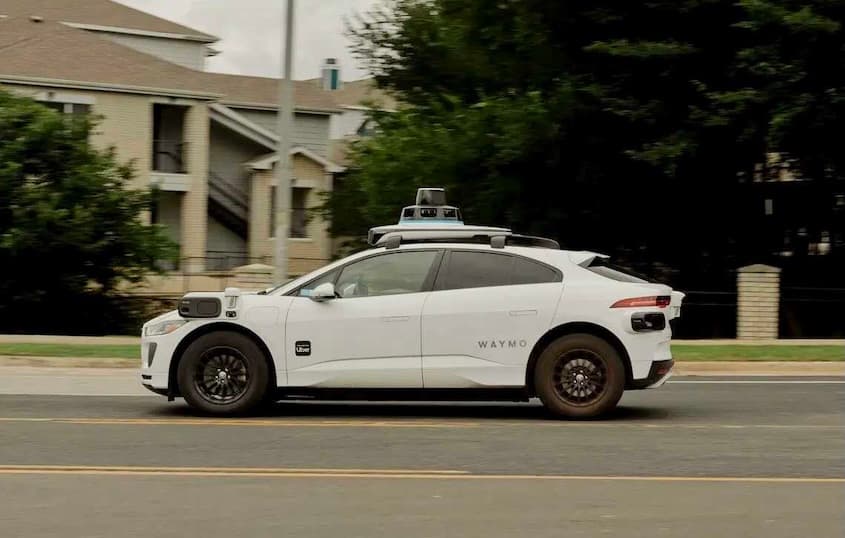
California’s DMV barred Waymo’s robotaxis from freeways, citing construction-zone hazards.
California has ordered Waymo’s driverless cars off its freeways, saying repeated trips into construction zones put workers and other drivers at risk.
The California Department of Motor Vehicles barred Waymo from operating or testing driverless vehicles on state freeways. The restriction took effect November 11 and became public November 17. A DMV spokesperson said the service posed an “imminent hazard to public safety” because its vehicles kept entering active work zones. It stays in place until Waymo shows the DMV it has taken effective corrective action.
Waymo says the incidents involved no injuries or collisions. It says its service continues on surface streets, where it reports more than half a million trips a week, and that it has temporarily restricted freeway service in its other markets.
The Incidents Behind the Order
The DMV cited two Bay Area incidents. Three Waymos entered an active construction zone on US-101 near Burlingame, and the agency says similar incidents have happened multiple times. In a separate incident captured on video, a Waymo tried to pass California Highway Patrol cars holding traffic on Interstate 280 in San Francisco earlier this month.
It isn’t the first freeway pause. Thirteen Waymos drove into closed or active freeway work zones in Phoenix in April and the Bay Area in May. Waymo then recalled nearly 3,900 robotaxis over software that could let them enter closed construction zones, its second recall in little more than a month.
We’ve previously covered other Waymo safety issues, including a software recall over robotaxis passing stopped school buses and a Waymo that drove through an exploding firework while passengers watched.
What the Crash Data Shows
Waymo’s own safety data covers 271.3 million driverless miles through June 2026. Against human benchmarks in the same cities, the company reports 95% fewer crashes with serious injuries or worse and 82% fewer injury-causing crashes. Those are company figures, and the comparison is built on surface streets. Waymo says it has limited freeway miles, so the numbers don’t measure freeway performance.
An independent IIHS study from July found Waymo’s driverless vehicles were involved in 68% fewer police-reportable crashes per mile than human drivers across San Francisco, Phoenix, Los Angeles, and Austin, and 81% fewer injury crashes. Results varied by city. San Francisco was 35% lower, and Austin was 4% higher on a small sample. IIHS also warned that the federal system for tracking automated-vehicle crashes isn’t good enough to monitor large-scale expansion.
Critics say the benchmark matters. A Hunter College report on robotaxis in New York argued Waymo should be compared with professional for-hire drivers, not the average driver. It acknowledged that limited miles make firm conclusions difficult.
Together, the research points to fewer crashes on city streets in most places studied, but it doesn’t settle how driverless cars handle freeways or construction zones, which is where the DMV focused.
If a Driverless Vehicle Is Involved in a Crash
Since July 1, California police can issue a “notice of AV noncompliance” to the manufacturer when a driverless car breaks traffic laws. In a crash, there may be no human driver to exchange information with, and claims generally run against the company operating the vehicle and its insurer. After a crash, call police, photograph the vehicle and scene, note the company name and any vehicle number, get medical care, and request the report. Companies must report crashes to NHTSA, and California requires collision reports to the DMV. California personal injury claims generally must be filed within two years.
If you’ve been hurt in a crash involving a driverless vehicle, the independent attorneys we connect you with can help you understand who may be responsible and what options you have.
For more articles like this, visit our News Page.
Tell us about your accident & get a free consultation now

Advertising is paid for by participating attorneys in a joint advertising program, licensed to practice law in their respective states. A complete list of joint advertising attorneys can be found here. You can request an attorney by name. We are not a law firm or an attorney referral service. This advertisement is not legal advice and is not a guarantee or prediction of the outcome of your legal matter. Every case is different. The outcome depends on the laws, facts, and circumstances unique to each case. Hiring an attorney is an important decision that should not be based solely on advertising. Request free information about your attorney's background and experience. This advertising does not imply a higher quality of legal services than that provided by other attorneys. This advertising does not imply that the attorneys are certified specialists or experts in any area of law. No legal services will be provided unless a signed agreement between the client and the attorney exists. We use cookies to personalize content and to analyze our traffic. We also share information about your use of our site with our analytics partners, who may combine it with other information you've provided or collected from your use of their services. You consent to our cookies if you continue to use our website.