Within Days, Two High-Speed Chases. The Pattern They Reveal About Why Drivers Run
Updated On: June 11, 2026

Tennessee & Texas both saw high-speed chases that endangered the public. Both drivers had drug issues & prior traffic violations.
Since the beginning of this week, two states saw dramatic high-speed pursuits that reveal a troubling pattern: drivers with a history of violations and substance abuse ignoring traffic stops, reaching extreme speeds, and forcing law enforcement to deploy massive resources just to stop them. Both cases ended with arrests. But the danger each chase created for innocent motorists lasted the entire time the vehicles were in motion.
The Tennessee Case: From Speeding to 120 mph
On June 10, a Tennessee Highway Patrol trooper saw a white BMW traveling north on Hickory Hill Road near Knight Arnold Road at a high rate of speed. THP said the driver, later identified as 28-year-old Timothy Jackson, was going 60 mph in a 45 mph zone. The vehicle's plate was scanned and reported to have a canceled registration.
What should have been a routine traffic stop escalated immediately. After a traffic stop was conducted, Jackson continued driving, and a pursuit ensued. Throughout the pursuit, the driver reached speeds of 120 mph, drove past multiple red lights, crossed into oncoming traffic, and lost control several times. Troopers boxed Jackson in with their patrol cars, and Jackson surrendered and was taken into custody.
The charges Jackson faces reflect the severity of what he did: evading arrest, reckless endangerment, reckless driving, simple possession of a controlled substance (marijuana), driving while license revoked, and driving an unregistered vehicle. Jackson's ID was revoked in 2017. A green leafy substance found in the vehicle tested positive for THC.
The Texas Case: From Passed Out to 130 mph
On June 8, Itasca police made contact with an individual who was passed out in a running vehicle around 2 PM Monday. Narcotics were seen in plain view on the passenger seat, and the driver was the only occupant. This was not an aggressive violator — this was someone clearly impaired and incapacitated.
Officers knocked on the window until the driver woke up and started driving off. The driver was ordered to stop but quickly drove away. Itasca police pursued the vehicle. The driver continued to flee at speeds close to 130 mph. The vehicle eventually wrecked on Highway 81, and the driver then fled on foot.
What followed was an extraordinary expenditure of public resources. The individual was tracked by K-9, drones and a helicopter. Multiple people called in after spotting the suspect. The individual was found hiding in a corn field and taken into custody 19 hours after the initial pursuit began.
The Pattern & Public Impacts
Both drivers had histories that should have flagged them as risks. Jackson's license had been revoked for nearly a decade. He was still driving. He had drugs in his vehicle. The Texas driver was discovered passed out with narcotics visible, a sign of chronic substance abuse and impaired driving.
In both cases, routine traffic stops revealed drivers who chose to flee rather than face accountability. And in both cases, that choice put every person on the roadway at risk. A vehicle traveling at 120 mph cannot be steered or stopped with any precision. Pedestrians, cyclists, and other motorists have no defense against a car moving at that speed. Red lights become suggestions. Lane markings become irrelevant.
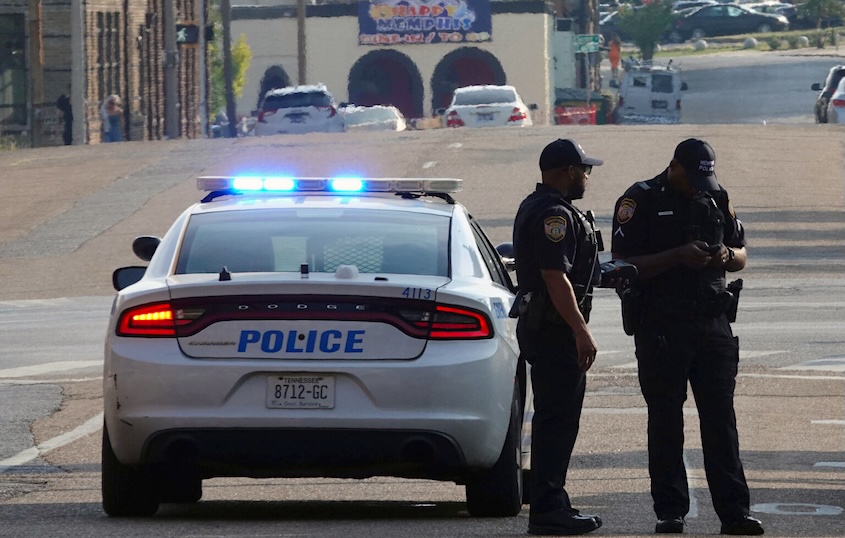
Recent analysis of high-speed chases in Memphis found that 43 percent of 75 chases resulted in accidents. Twenty-nine of those accidents involved Tennessee Highway Patrol pursuits. Not all accidents in a chase involve the fleeing vehicle alone. Innocent motorists get struck. Bystanders get hit. The decision by one driver to flee can cascade into injuries and deaths for people who did nothing wrong.
This is why some law enforcement agencies have adopted policies restricting high-speed pursuits. The danger created by the chase itself sometimes exceeds the danger posed by allowing a minor violator to be apprehended later. But that calculation is always difficult, because some drivers who run have committed serious crimes, and stopping them becomes a public safety imperative.
What These Cases Mean for Victims
If you are hit by a vehicle fleeing police, your claim for damages is not blocked by the fact that a chase was underway. The fleeing driver's decision to run and the police department's decision to pursue are both potential sources of liability. In Jackson's Tennessee case, any innocent motorist struck during that 120 mph flight through red lights and across lanes would have strong grounds for a personal injury claim against both Jackson and potentially the police department, depending on the jurisdiction's laws around pursuit liability.
The Texas case, because it involved such extreme speeds and a driver who was apparently impaired, would similarly create liability for anyone harmed. A 19-hour search for a driver found asleep with drugs visible paints a picture of chronic impairment and recklessness that juries understand and hold accountable.
What Comes Next
Jackson is scheduled to appear in court to answer the charges he faces. The Texas driver will go through a similar process. Both cases will likely result in convictions and jail time. But for communities, the real cost is immeasurable; the risk that was created during those minutes of high-speed flight, and the knowledge that drivers with suspended licenses and drug possession are still on the roads, and still deciding to run when stopped.
If you have been injured in a crash involving a high-speed chase or a fleeing driver, the independent attorneys we connect you with can help you understand your options for recovery and hold all responsible parties accountable.
For more articles like this, visit our News Page.
Tell us about your accident & get a free consultation now

Advertising is paid for by participating attorneys in a joint advertising program, licensed to practice law in their respective states. A complete list of joint advertising attorneys can be found here. You can request an attorney by name. We are not a law firm or an attorney referral service. This advertisement is not legal advice and is not a guarantee or prediction of the outcome of your legal matter. Every case is different. The outcome depends on the laws, facts, and circumstances unique to each case. Hiring an attorney is an important decision that should not be based solely on advertising. Request free information about your attorney's background and experience. This advertising does not imply a higher quality of legal services than that provided by other attorneys. This advertising does not imply that the attorneys are certified specialists or experts in any area of law. No legal services will be provided unless a signed agreement between the client and the attorney exists. We use cookies to personalize content and to analyze our traffic. We also share information about your use of our site with our analytics partners, who may combine it with other information you've provided or collected from your use of their services. You consent to our cookies if you continue to use our website.